Bikes on the T
Bikes on the T

Bikes on the T

Your bike goes farther on the T, now more than ever before.

The MBTA gives bicyclists more access to public transit than ever before. You can combine the pleasure of riding your bicycle with the convenience of using public transportation to get where you need to go in the Boston area. Bikes are allowed on all buses equipped with bike racks and on all boats at any time. Riders may also bring bikes on most subway lines and all commuter rail trains during non-peak hours. Rules and regulations do exist however and are available below.

Bikes on Buses

The MBTA is installing bike racks on many of our buses per the recommendations of the MBTA′s Bicycle and Transit Advisory Committee. As of September 2007, rack-equipped buses are operating on the following Bus Routes:

We now have 320 rack - equipped buses in service, representing almost 35% of the fleet.

Please read the updated Bikes on the T policy below and the newly issued brochure on our "Bikes on the T" Program available for download here.

We will continue to update this website as new bike rack-equipped routes become available.

Rules & Regulations

Entering a Station

  • There is no additional fare charge for bikes.
  • Enter subway stations through the accessible fare gate/entrance.
  • Do not take your bike on an escalator.
  • Biking anywhere in station areas is strictly prohibited.
  • Do not interfere with passengers and stand far away from platform edge.
  • Seniors and persons with disabilities are afforded preference over bicycles.

T Boats & Ferries

Bikes are allowed on MBTA boats at any time

Commuter Rail

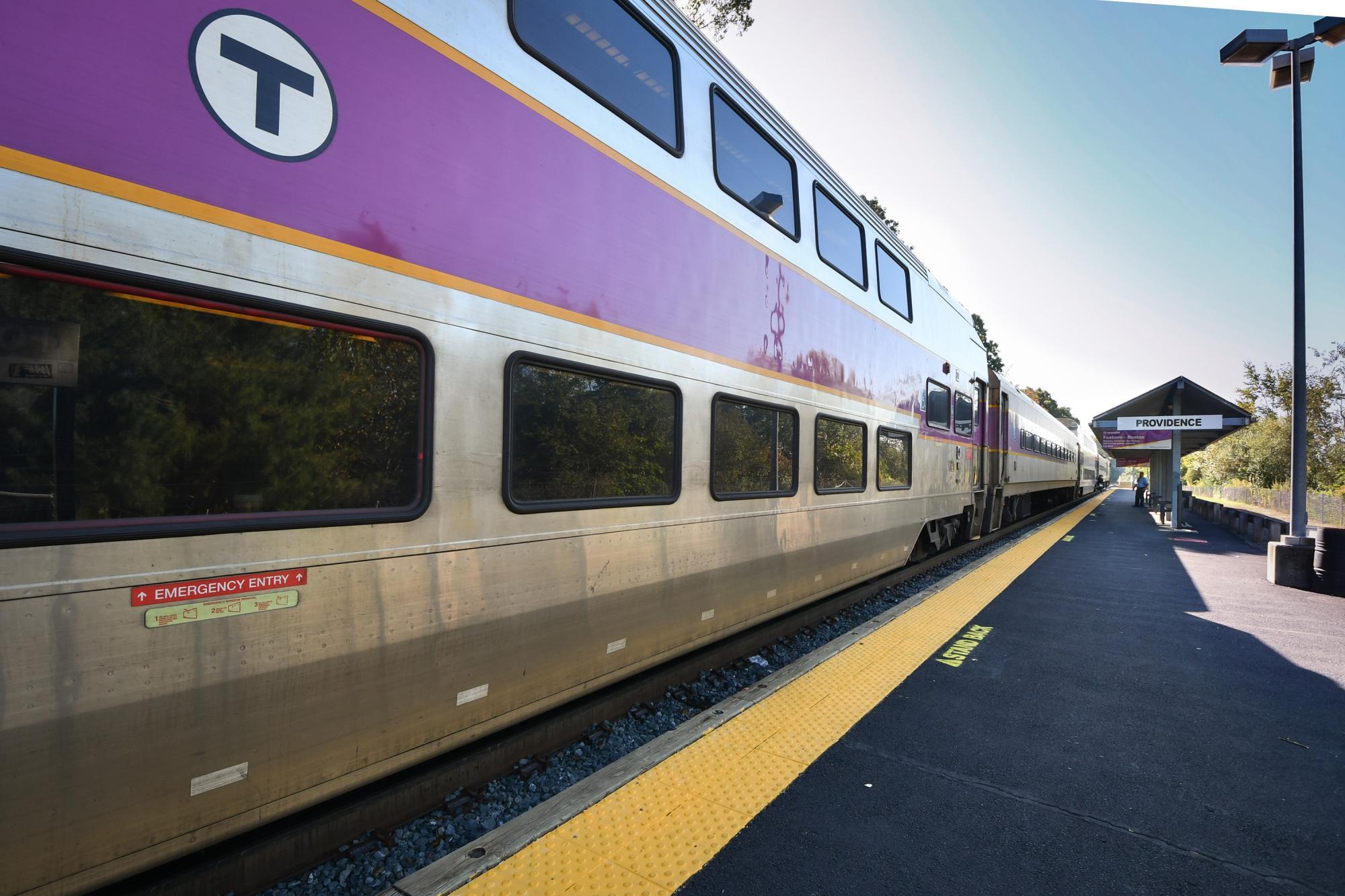
  • Bikes are allowed anytime except during weekday rush hours (morning inbound and evening outbound), which are shaded on the Commuter Rail schedules. Bikes are permitted all day on weekends.
  • Please follow the conductor's instructions when entering or exiting the train.
  • If the train is crowded so that a bike would present an obstacle to other passengers, the cyclist must wait for a less crowded train, pursuant to the discretion and instructions of conductors.
  • In a train emergency, stow your bike as far away from the aisle as possible.
  • Bicycles are not allowed on New Year's Eve and July 4th between 10 a.m. and 6 p.m. inbound or after 4 p.m. outbound.

Subway

  • A maximum of two (2) bikes are allowed on each car on Blue, Red and Orange Line trains only.
  • Bikes, with the exception of folding bikes, are not allowed on the Green Line, the Mattapan Trolley, or the Silver Line.
  • On weekdays, bikes are allowed before 7 a.m., between 10 a.m. - 4 p.m., and after 7 p.m. and all day on weekends, excluding substitute bus shuttle service.
  • Cyclists must board and ride on either end of the car and shall not transport bicycles down the aisle between end doors.
  • Cyclists must wait until all exiting and entering passengers have cleared the doorways before moving bicycles. Once aboard the train, cyclists must hold the bicycle firmly at all times, kickstand up, and not allow the bicycle to lean against patrons.
  • A child with accompanying adult, both with bikes, should remain at the same end of the car.
  • If train is crowded so that a bike would present an obstacle to other passengers, the cyclist must wait and board a less crowded train.
  • If cyclist is unable to disembark train without interfering with other passengers, the cyclist must remain on the train until it becomes less crowded.
  • In a train emergency, stow your bike as far away from the aisle as possible.

Holidays and Special Events

  • Due to train crowding often associated with special events, bikes are not allowed on the subway on St. Patrick's Day, Patriots Day or July 4th.
  • Bikes are not allowed between 8:30 p.m. and 11:00 p.m. on evenings of TD Banknorth Garden events or Red Sox games.
  • When special events are held at or near individual stations, bicycles may be prohibited due to overcrowding. Station personnel will notify cyclists of such restrictions.

Buses

  • Bikes are always allowed on bike racks mounted on the front of buses that are in operation.
  • At no time may a bike be placed in the interior of a bus.
  • At no time may a bike be brought on board Silver Line buses.

* Bicyclists will not be permitted on any shuttle buses that are substituting for Commuter Rail or Subway service.

Prohibited T Stations

Due to safety considerations and congestion, cyclists with bikes may not enter or exit the following stations:

  • Park Street (Red and Green Lines)
  • Downtown Crossing (Red and Orange Lines), except to transfer lines
  • Government Center (Blue and Green Lines)

Folding Bikes

  • Folding bikes are allowed on Subway, Commuter Rail and buses at any time when folded in the most compact position and carried in a carrying case intended for that purpose.

Bicycle Parking at T Stations

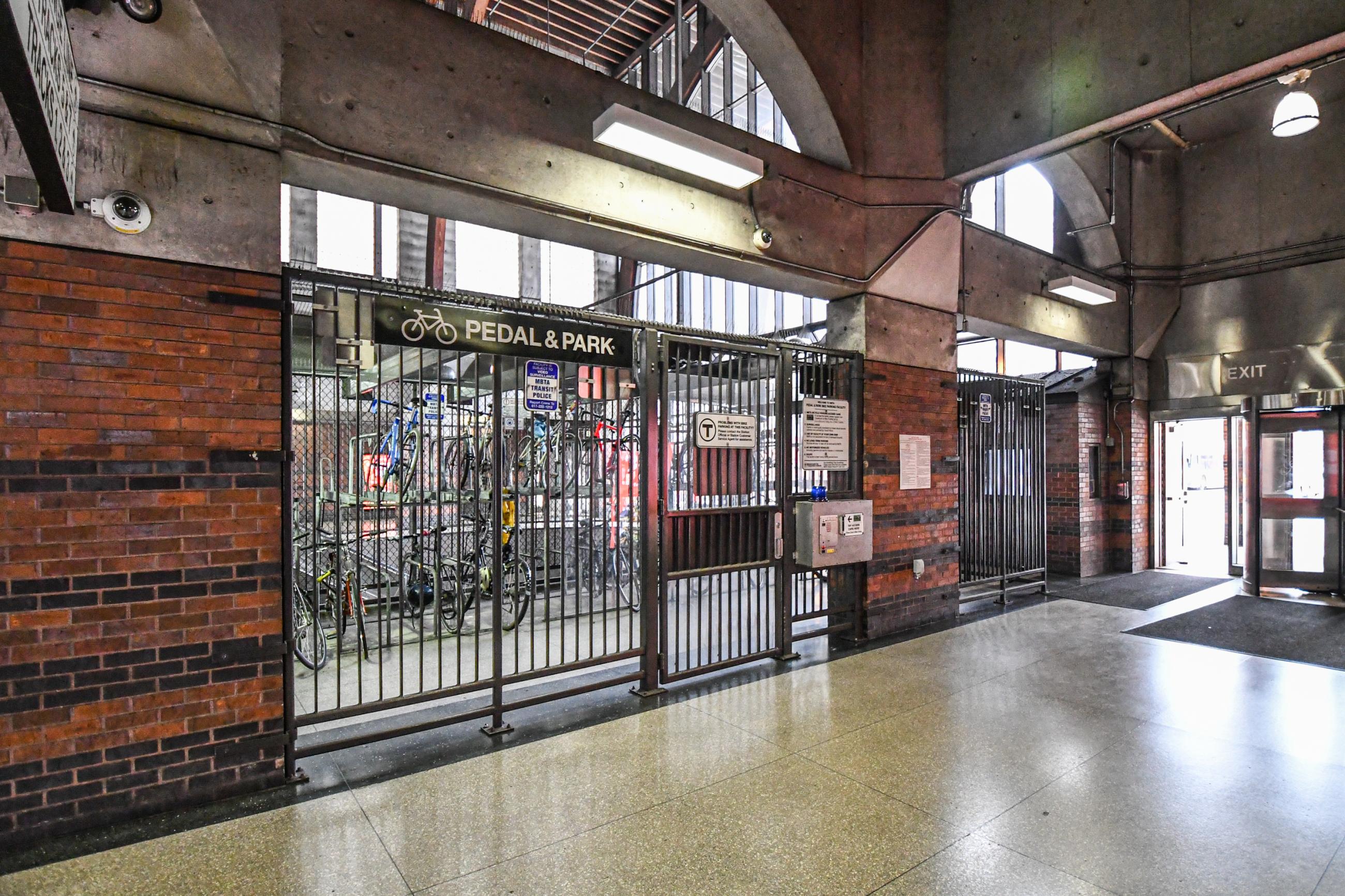
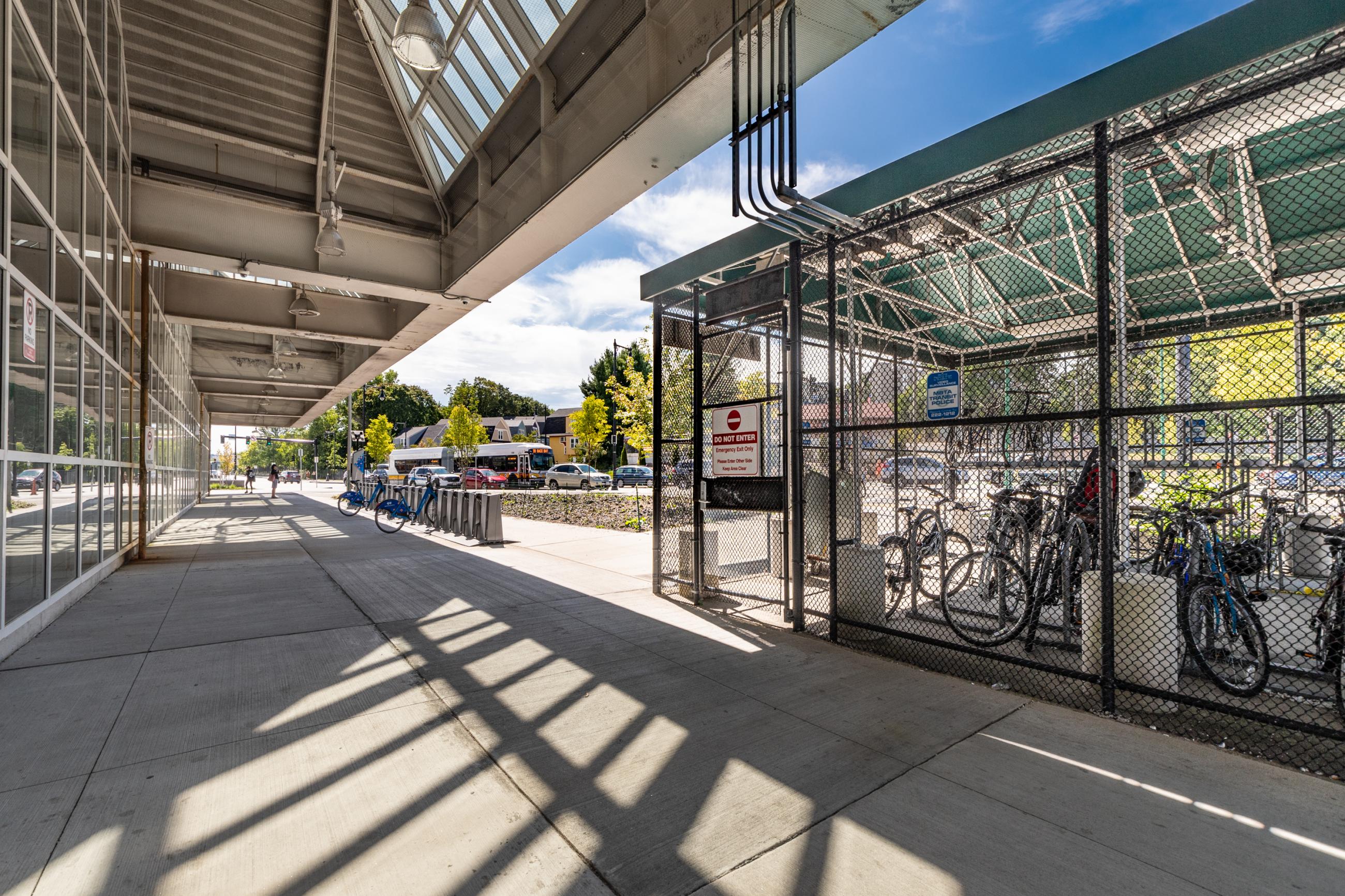
  • Bike racks are located at most T stations and more are being added. Please park and lock your bike in a way that allows other cyclists to also share the rack.
  • Bicycles not parked at racks can create a safety hazard and are subject to removal by the T.
  • Bicycles that are left for more than two weeks at a station rack are subject to removal and disposal by the T.

Other Rules

  • All passengers under 16 must be accompanied by a parent or legal guardian to be able to board a subway train with a bike or use a bus bike rack.
  • Cyclists are accommodated on first-come, first-served basis. The T reserves the right to prohibit bicycles if trains are crowded or access is impeded, and we make no assurance that space will be available for bicycles. Cyclists must yield priority seating to seniors and persons with disabilities and may be required to leave the train at any time if the priority seating space is needed for customers with disabilities.
  • T personnel are not permitted to assist with boarding bicycles, nor will the wheelchair lift be used to load or unload bicycles.
  • If there is an emergency evacuation of the train, cyclists must leave their bicycles on the train, in a manner that does not block aisles or doors.

Liability & Enforcement

  • Cyclists remain legally responsible for any damage to T facilities or equipment and/or for any injury, loss or damage sustained by passengers or train personnel that results from a cyclist's negligence. The T is not responsible for damages incurred or caused by bicycles, or to bicycles on T property.
  • Cyclists failing to abide by the rules and regulations or the specific directions of T staff or T Police, are subject to removal from the system.

Using Bus Bike Racks

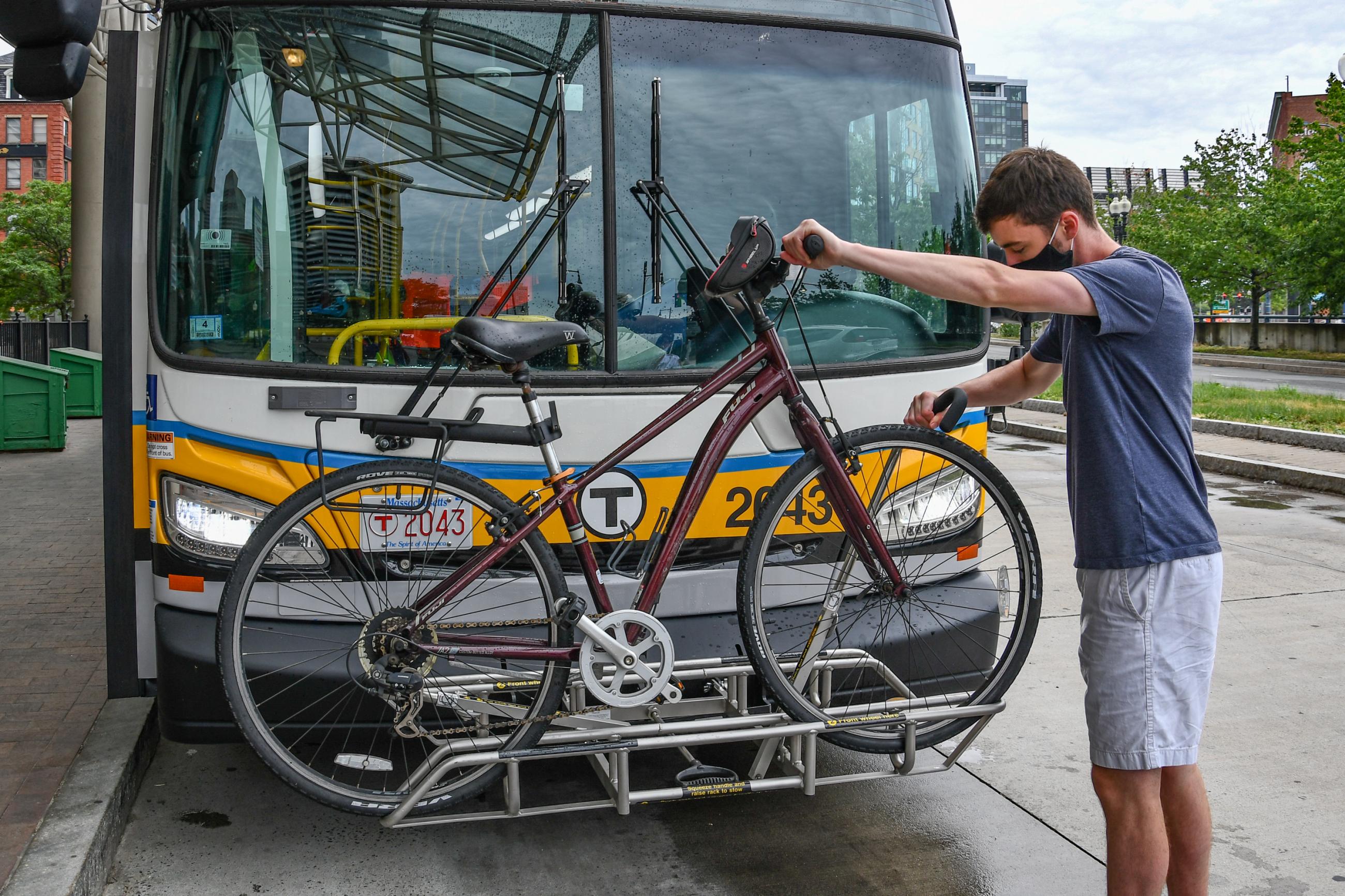
Some bus routes operate buses equipped with bike racks. Each bicycle rack holds two bicycles. Only conventional single seat, two-wheeled bicycles and electric bicycles the size of a standard bicycle are allowed on the racks. Please follow these standard rules:

  1. You are responsible for loading, securing, and removing your bicycle from the bicycle rack. Always alert the driver that you are about to use the bicycle rack and approach the bus from the curbside.
  2. Remove all loose items from the bike. Avoid kneeling or squatting out of the driver's line of sight.
  3. Squeeze the handle located in the center of the bike rack to release the latch and pull rack down.
  4. Place bike on rack by inserting the front wheel in designated wheel slot. Always use inside front slot first.
  5. Pull out support arm and raise it up over the front tire.
  6. Confirm that bike is safe and secure prior to boarding bus. Do not lock your bike in the rack.
  7. Inform bus driver of destination upon boarding bus. Sit near the front of the bus and watch your bike. The T is not responsible for stolen or damaged bikes.
  8. As you approach your stop, advise the driver that you will be unloading your bicycle.
  9. To unload your bike, raise the support arm off the tire and move it down and out of your way. Lift your bike out of the rack.
  10. Return the bike rack to the folded position if there isn't another bike in the rack. Make eye contact with the driver to indicate that you are through with the rack.

*Remember: Never cross the street in front of the bus. Passing traffic cannot see around the bus. As a safety precaution, wait until the bus moves away before getting on your bicycle.

More Questions?

If you have any more questions feel free to contact Joseph Cosgrove at (617) 222-4400.

Getting Around Boston

Learn about T subway lines and stations
Download the Guide »

Accessibility Services: Riding the T for all Abilities